
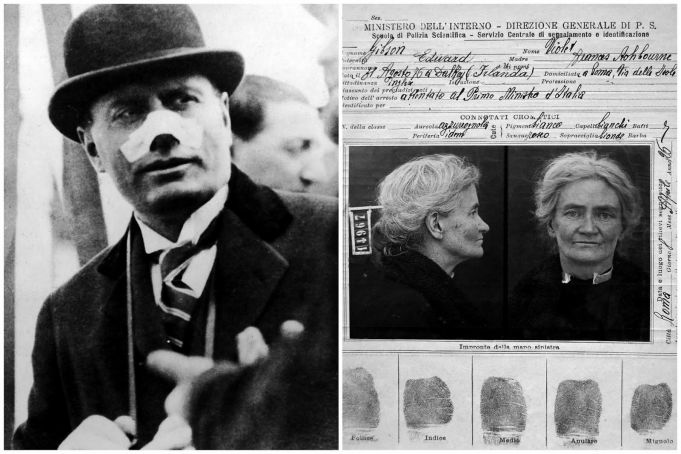
Violet Albina Gibson was born in Dublin on 31 August 1876 into the Anglo-Irish aristocracy: her father, Edward Gibson, served as Lord Chancellor of Ireland and was the first Baron Ashbourne.
Raised in a privileged environment, she was presented as a debutante at the Victorian court, but from an early stage she developed a personal trajectory that was atypical of her social milieu, marked by religious interests and a gradual estrangement from dominant British culture. On an intellectual and spiritual level, Gibson underwent several experiences: initially theosophy, followed by conversion to Catholicism in 1902, a choice that deepened the rift with her Protestant family background. In the years that followed, she moved within European religious and pacifist circles, adopting antimilitarist positions and attracting the attention of British authorities. These paths, combined with family bereavements and physical and mental health problems, contributed to a progressive personal radicalization. In 1925 Gibson settled in Rome, living in religious environments and closely observing the Italian political reality during the consolidation of the Fascist regime. The political climate was marked by crucial events such as the assassination of Giacomo Matteotti (1924), which provoked international outrage and strengthened anti-fascist opposition—elements which, according to various reconstructions, contributed to the maturation of her decision to act. The nature of her act remains a subject of historiographical debate. The official version at the time—supported by the regime and by some British authorities—insisted on mental illness, allowing the attack to be depoliticized and diplomatic tensions to be avoided. However, more recent studies and critical reassessments tend also to emphasize possible political and anti-fascist motivations, placing Gibson, albeit in an atypical way, within the broader framework of European opposition to the regime. On 7 April 1926, in Rome, in Piazza del Campidoglio, Gibson attempted to assassinate Benito Mussolini. The head of government had just left an international conference of surgeons when the woman fired at him at close range. The first shot only grazed Mussolini’s nose, probably due to a sudden movement of his head (according to some accounts, linked to the Roman salute or to a reaction to the crowd). Gibson immediately attempted a second shot, but the weapon jammed. The assailant was immediately overpowered by the crowd—which attempted to lynch her—and rescued by police intervention. Mussolini, only slightly injured, quickly turned the episode into a propaganda tool, minimizing the incident and appearing in public only a few hours later. Gibson did not provide a coherent explanation for her action: in some statements she claimed to have acted “to glorify God.” The judicial proceedings concluded with a finding of total mental incapacity, and in 1927 she was repatriated to the United Kingdom. She spent the rest of her life confined in St Andrew’s psychiatric hospital in Northampton, where she died in 1956.
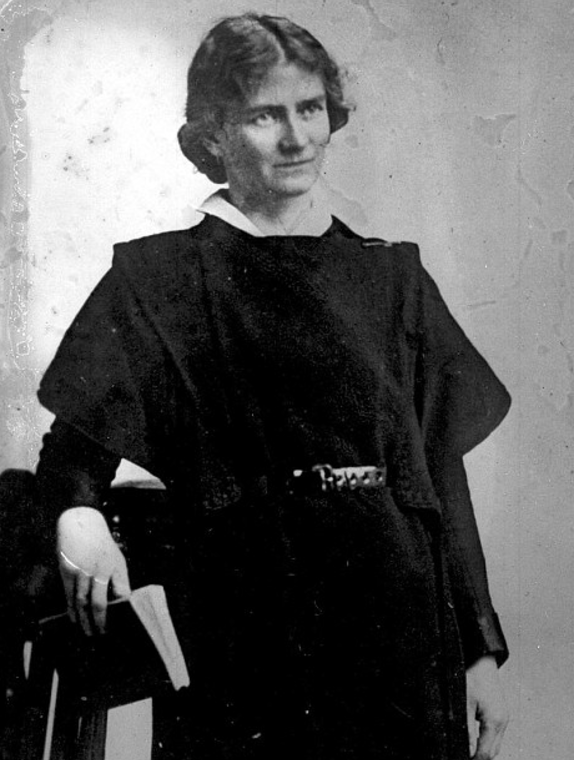
Bibliography
- “Violet Gibson: The Woman Who Tried to Kill Mussolini” by Patricia M. P. T. This book examines the life of Violet Gibson, her motivations, and the aftermath of her assassination attempt, drawing on a variety of sources to offer a detailed account of her troubled life and infamous act.
- “The Woman Who Shot Mussolini”, by Frances Stonor Saunders The book that brought back Violet Gibson as an historical figure, and that told the story of the woman who tried to stop the rise of Fascism and change the course of history.
- “The Assassination of Mussolini” by Cesare De Simone While primarily focused on Mussolini’s enemies, this book dedicates a chapter to Violet Gibson’s failed assassination attempt and the subsequent cover-up by the Italian government.
- “The Oxford Handbook of Fascism” edited by R. J. B. Bosworth This work includes a broader historical context in which Mussolini’s rise and the societal tensions that may have contributed to violent acts against his regime are discussed, including Violet Gibson’s shooting.
Resources
- Dictionary Of Irish Biography – Violet GIbson An extensive and thorough biography of Violet Gibson’s life and stories. If you’re looking for details, this is the place.
- Lisa O’Neill sings Violet Gibson for The Works Presents A powerful performance, recorded during the Covid pandemic, of Lisa O’Neill’s song about the failed attempt to shot Mussolini.
- WorkingClassHistory – Violet Gibson Attentat A brief recollection of the Mussolini assassination attempt, and the following inquiry.
- The Irishwoman Who Shot Mussolini – RTÉ Four people tried to assassinate Italian fascist dictator Benito Mussolini. Only one person ever came close – her name was Violet Gibson and she was Irish. Violet spend the rest of her life in mental institutions, forgotten by society and by history.
- “New evidence reveals extent of anti‑fascist motives behind ‘insane’ aristocrat’s plot to assassinate Mussolini” – TheConversation.com